
May 25, 2026
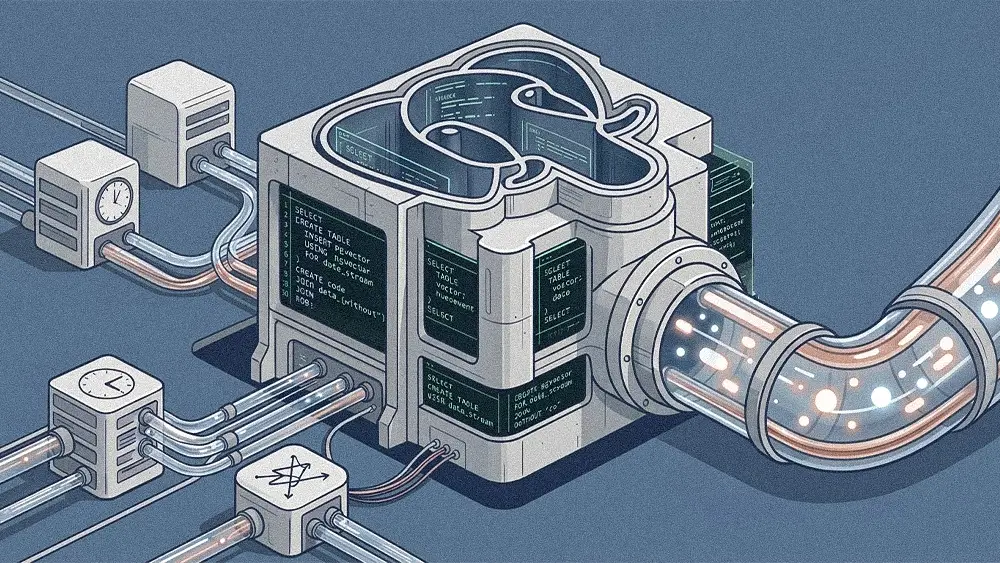
A DevOps engineer running production on pgBackRest, a senior DBA at the European Patent Office, a database lead at one of Europe's largest payments platforms, and a PostgreSQL contributor who maintains the most-likely-next-tool weigh in on what changes after the pgBackRest scare.
Security, Governance, & Deployment
Enterprise Innovators
The Future of Code
Data at Scale
Vasilios Syrakis, an eight-year Atlassian veteran who built the Sovereign control plane before being cut in the March layoffs, on the maintenance timer running underneath every AI-assisted codebase shipping into production right now.
4 min read
Weill Cornell's Olivier Elemento deploys sub-agents to audit every AI-generated finding. He told The Read Replica why layered verification is the only safeguard against scaling flawed science.
Bart Lipinski, Senior Manager of Marketing Technology at Grainger, explains why companies that skip foundational data and governance work end up paying for powerful AI tools they only use to a fraction of their potential.
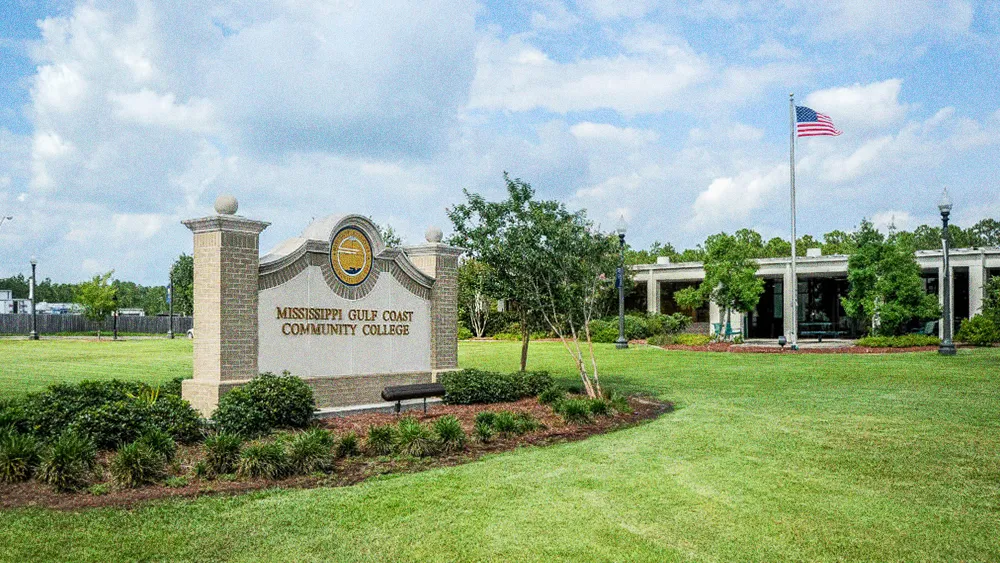
Dr. Kollin Napier, Director of the Mississippi Artificial Intelligence Network (MAIN) at Mississippi Gulf Coast Community College, discusses his work advancing AI literacy, workforce development, and the adoption of applied AI across Mississippi.
For decades, the compiler has been writing to a human. Vercel's quiet release of Zero, a systems language whose diagnostics emit JSON, not prose, is the first widely watched attempt to make the assumption itself negotiable.
Gary Ang, former Lead of AI Supervision at the Monetary Authority of Singapore, discusses the evolution of spec coding in the era of LLM-driven development.
Drew Moisant, Principal Cloud Architect at Chamberlain Group, discusses why sometimes the only AI governance layer that works is the one that lives below the model's reasoning.
Software Engineer at one of the UK’s largest banks, Yamini Krishnaprakash, on why observability is solved, while correctness isn't, and most agent pilots are stuck between the two.
Vincenzo Agrillo, Principal Development Professional at MSG Global Solutions, discusses what happens when AI builds the frontend in an hour but nobody is minding the API contracts underneath.
Theo Ezell, AI Security Architect and Creator of The Citadel Protocol, argues that the way to prevent AI agents from overstepping security boundaries is to ground them in hardware.
Satish Kumar Anandhan, Senior Architect at Salesforce, and Ryan Hildebrand, EVP and Chief Innovation Officer at Bankwell, on why the twenty-year wall in front of access control is a scale problem, not a competence one, and what better defaults actually unlock.
The Read Replica
Hameem Mahdi, Sr. Principal Applied Scientist at the Technology Innovation Institute, spent a decade building ML infrastructure at Mayo Clinic. He tells The Read Replica most teams are solving explainability backward.
Vishal Sharma, who has built enterprise architecture across JPMorgan Chase, PwC, and Prudential for two decades, on how the same social pressure that makes engineers write better code under review now structures multi-model development workflows in financial services.
Amanbolat Balabekov, Staff Engineer at Wolt, on why the bottleneck behind most AI initiatives isn't writing the code, it's the architectural balancing act between shipping features at lightspeed and keeping the infrastructure alive.
Palanivel Rajan Mylsamy, Director of Engineering Program Management at Cisco, on why the QA tax on AI-generated code can't be written off, only paid earlier in the pipeline before it comes due at the database.
May 19, 2026
May 11, 2026